
Inert materials: classification, grain size

When people talk about sustainable construction, they tend to think of technologies, systems and renewable sources. But sustainability starts much earlier: with materials. Inert materials, often underestimated, are the basis of any well-designed pavement. In this article we explain what they are, what characteristics they should have, and how Green Ways® uses them to reduce the environmental impact and increase the efficiency of works.
What are inert materials and why they are important
The term“aggregate materials” refers to sands, gravels, crushed stone and other natural or recycled aggregates that do not undergo chemical transformations during their use. They are used in construction as main components for sub-bases, ballast and pavements.
The importance of aggregates comes from their structural function: they must resist compression, provide drainage and contribute to the stability of the treated soil.
Classification and particle size of aggregates
Inert materials can be classified according to various criteria, but two are particularly relevant: origin and grain size.
Origin of aggregates:
- Natural: derived from crushed rock, sand or gravel extracted from quarries or river beds.
- Recycled: obtained from materials from demolition (concrete, bricks, etc.).
- Artificial: produced by industrial processes, such as blast furnace slag.
Aggregate particle size
Particle size indicates the size distribution of the particles that make up the aggregate, and is a key aspect of successful paving.
A balanced particle size curve, that is, a well-measured mixture of fine, medium and coarse particles:
- Improves compaction and bottom stability;
- Allows good drainage, preventing water stagnation;
- Prevents erosion;
- Ensures an even distribution of loads.
Knowing and controlling grain size is essential to achieve a quality technical and aesthetic result, whether working with natural aggregates or recycled aggregates.
Local aggregates and recycled aggregates: a sustainable choice
Green Ways® promotes the use of local aggregates or recycled aggregates as an alternative to sourcing from distant quarries and processing centers. Unlike others in the industry, who have to prepare pre-mixes in sheds and then transport them to the site at high cost and high environmental impact, Green Ways® brings only the stabilizing binder to the site, taking advantage of materials already available on site.
This approach is particularly beneficial in contexts such as Africa or rural European areas, where complex logistics infrastructure is lacking. Using local land means lowering transportation costs, reducing CO₂ emissions and water use, and creating cheaper and more replicable infrastructure.
Standards and technical references
The use of aggregates is regulated by European and national technical standards. Among the most relevant:
- UNI EN 13242: aggregates for unbound and bound materials for civil engineering works and road construction.
- UNI EN 12620: aggregates for concrete.
- UNI 11531-1 and 11531-2: mixtures treated with hydraulic or alternative binders for road pavements.
Green Ways® operates within these regulations, providing compatible products and offering technical support for the proper design of the stratigraphic package.
The case of Sicily: sand and lava aggregates for walking paths in a garden and nursery
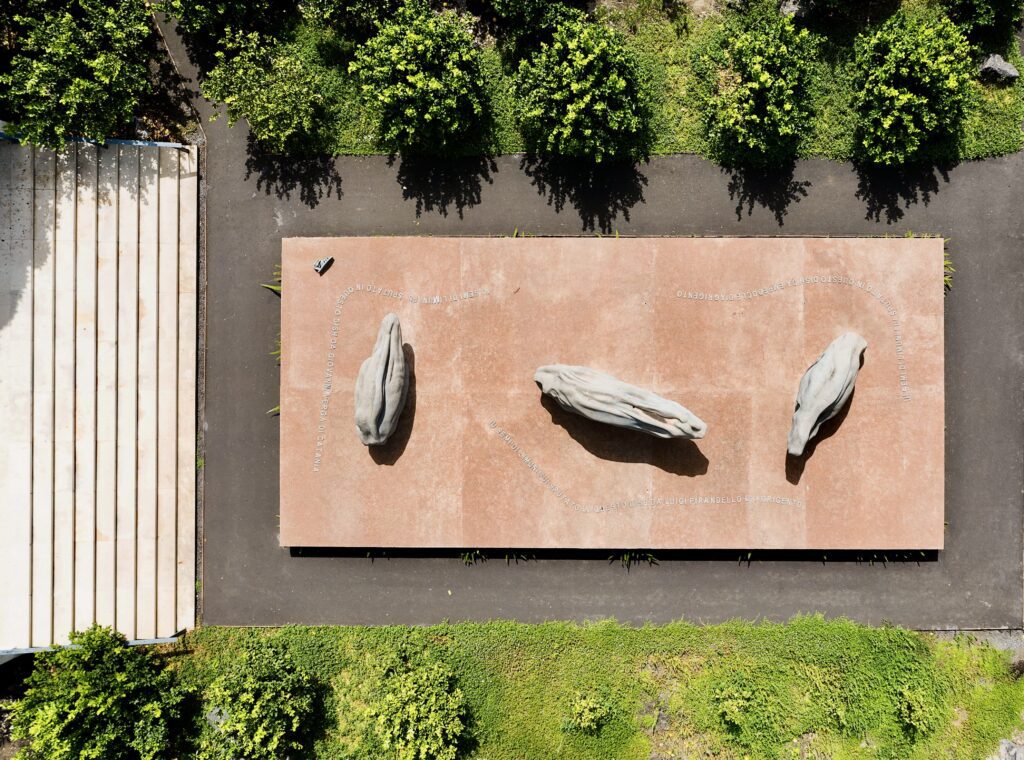

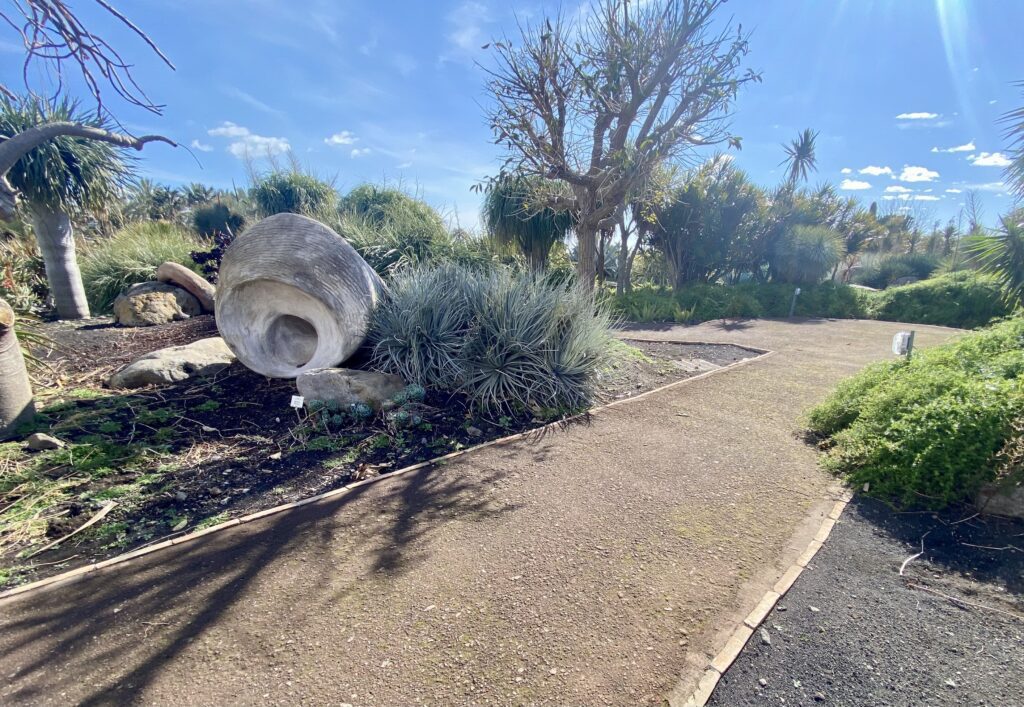
A concrete example is the project carried out in Sicily within a Mediterranean garden and nursery. Green Ways® collaborated in the creation of pedestrian walkways using lava sand and draining lava aggregate treated with Green Stab Pave® e Soil Sement® EF.
The intervention thickness of 12 cm resulted in compact, stable and perfectly draining surfaces. The use of local materials, combined with proper grain size grading, ensured high mechanical performance and full landscape integration with the natural Sicilian environment. This approach avoided the need to use cementitious materials, minimizing environmental impact and maintaining an aesthetic consistent with the Mediterranean context.
Conclusion
The choice of aggregate materials is far from secondary: it determines the quality, durability and environmental impact of a pavement. Green Ways® proposes a sustainable model based on technical expertise, customized advice and the use of high-performance binders that enhance the value of locally available aggregates. Because building well is not only about building solid, but also building in harmony with our surroundings.