
Soil Stabilization: an ally for the microclimate and water management worldwide
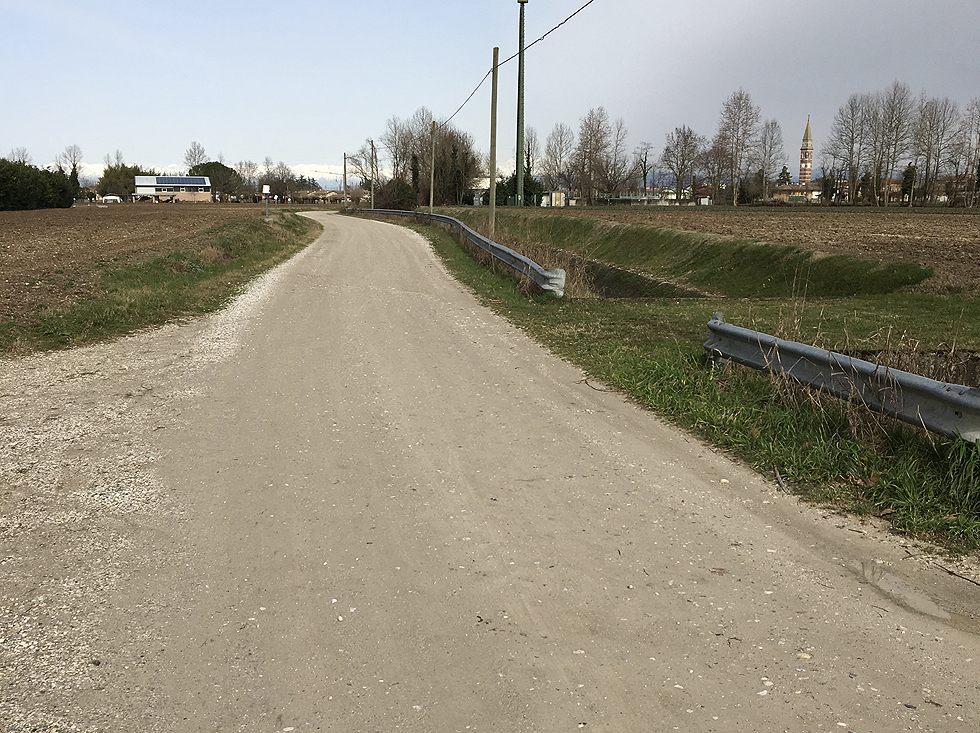
In recent years, climate change has made intense and sudden rainfall more frequent, with serious consequences for rural roads, cycle paths, and natural areas. Water that cannot infiltrate the ground generates runoff, flooding, and erosion damage. On the other hand, the traditional solution of asphalt makes the soil impermeable, worsening water-related problems and contributing to the urban heat island effect during the summer months. Soil stabilization offers a third way: a technology that makes the soil resistant, permeable, and environmentally friendly. A choice that combines durability, reduced maintenance costs, and environmental sustainability.
What soil stabilization is
Soil stabilization is a technique that has been used for over two centuries to improve soil strength and durability. In the past, it was mainly carried out with cement or lime, materials that, however, seal the soil, making it impermeable and altering its natural balance.
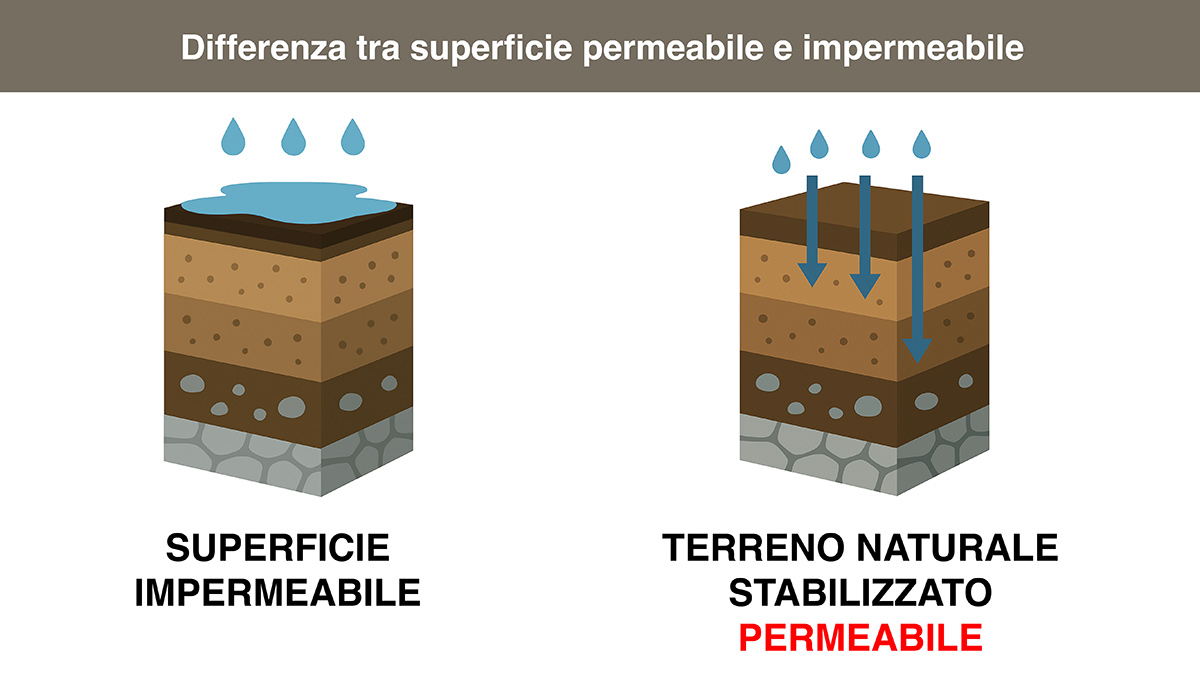
Today, eco-friendly binders are available that allow the soil to be consolidated while maintaining permeability: water continues to filter through, reducing stagnation and improving the environmental sustainability of the intervention.
In Italy, and beyond, these binders are used in many different contexts:
- rural and farm roads
- construction site tracks
- cycle paths and nature trails
- urban parks, national parks
- archaeological sites and landscape areas where it is important to preserve the visual impact.
Benefits for the microclimate
Asphalted and concreted surfaces tend to store heat during the day and release it slowly at night: this generates the so-called urban heat islands.
By contrast, stabilized soil reflects less heat, maintains a more natural temperature, and contributes to a more balanced local microclimate. In addition, the reduction of fine dust improves air quality.
Management of runoff water
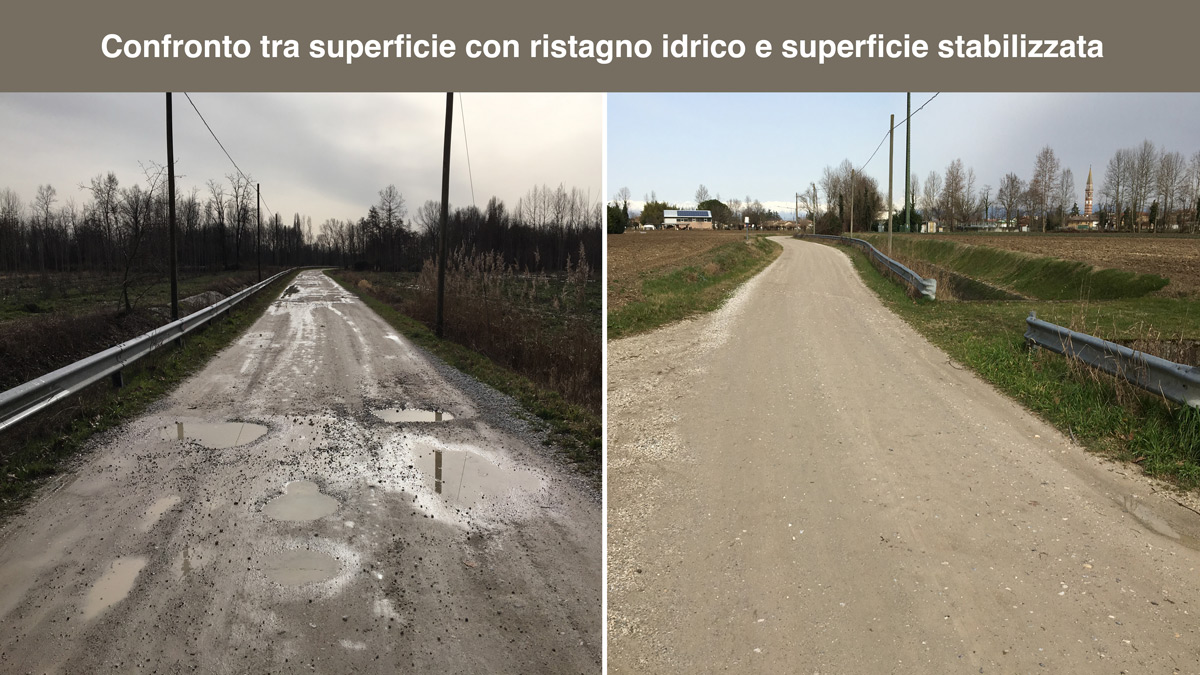
One of the strengths of soil stabilization is its ability to promote natural drainage. Rainwater filters through the stabilized surface, reducing the volumes flowing on the surface. This limits runoff and slope erosion. This approach integrates perfectly with European policies for sustainable water management.
Environmental and economic advantages
In addition to improving the microclimate and water management, soil stabilization offers numerous benefits:
- less maintenance
- reduction of CO₂ emissions
- landscape integration
- Use of local materials.
Choosing soil stabilization means investing in light but durable infrastructure that improves quality of life, respects the environment, and meets local needs.
In Italy, and beyond, Green Ways offers these innovative solutions that have been used for over 45 years worldwide, developed by Midwest Industrial Supply.